The Great Reshuffling: How to Survive (and Thrive) in the AI Layoff Era

January 28, 2026
Recent interviews with displaced workers, HR executives, and hiring managers across the country reveal a sobering reality—one that surprises even career optimization experts with decades of experience.
The numbers making the rounds on LinkedIn right now aren't exaggerated. They're actually conservative.
Here's the breakdown.
The Reality Check
In 2025, approximately 245,000 tech workers globally lost their jobs. That's 674 people per day. But here's what most clickbait headlines miss: this isn't just a tech problem anymore.
Consider what's happening right now, in January 2026:
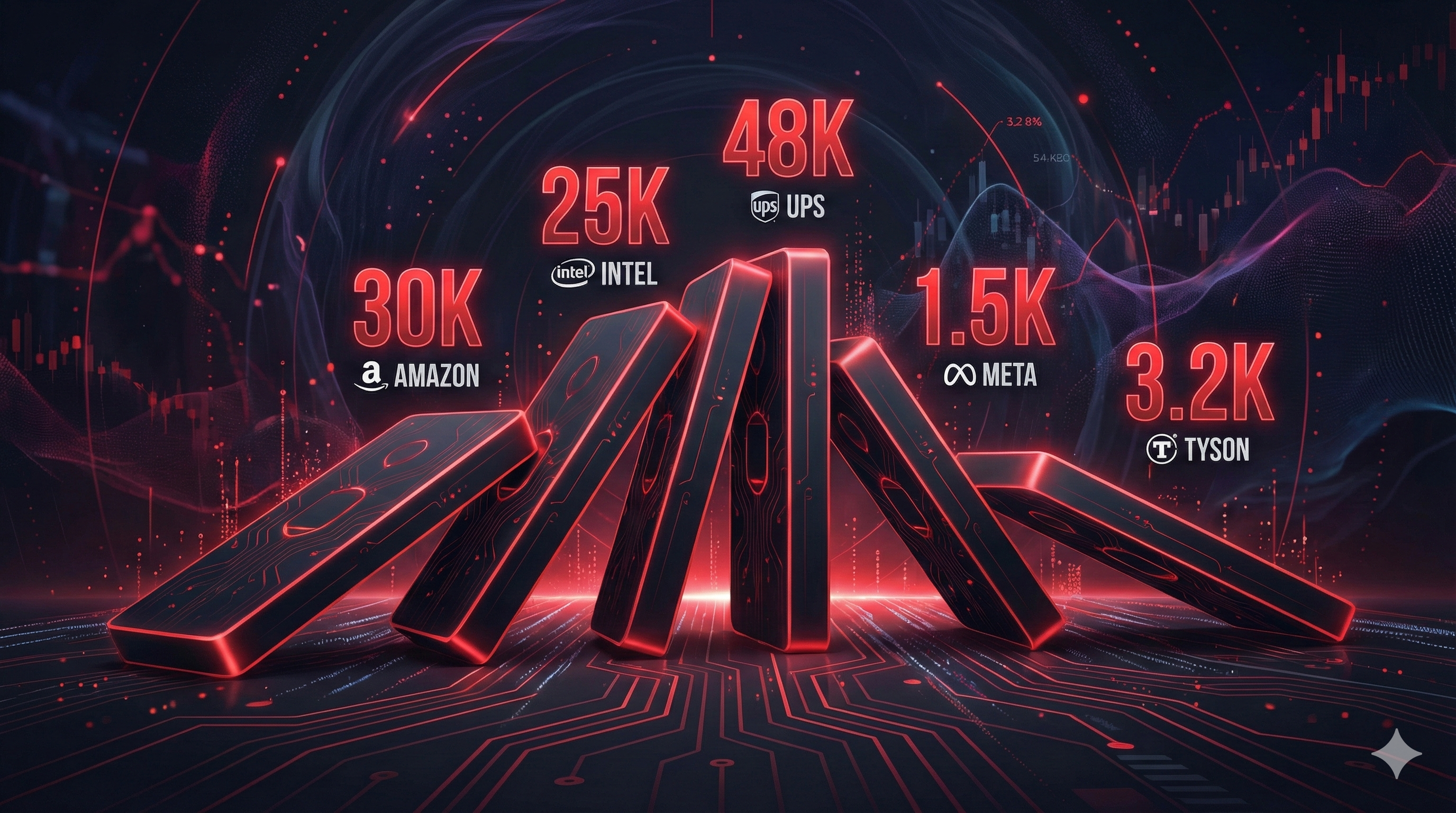
Amazon just began its second wave of layoffs—14,000 positions this round, bringing total cuts to potentially 30,000 by May. CEO Andy Jassy has been remarkably candid: AI means "fewer people doing some of the jobs that are being done today."
Intel slashed 25,000 jobs in 2025—roughly 20% of its workforce—with no severance packages offered. The new CEO's memo to employees was blunt: "There are no more blank checks."
UPS eliminated 48,000 positions in 2025 and just announced another 30,000 cuts for 2026. Their "Network of the Future" facilities now have robots outnumbering workers 15-to-1.
Meta cut 1,500 from Reality Labs this month alone, pivoting hard from the metaverse toward AI after burning through $73 billion in losses.
Tyson Foods closed its Lexington, Nebraska plant—eliminating 3,200 jobs in a town of 11,000 people. The ripple effect is expected to cost the state 7,000 jobs total.
This isn't a correction. It's a restructuring.
What's Actually Driving This
Here's where most analysis gets it wrong. Everyone wants to blame AI exclusively, but the data tells a more nuanced story.
According to RationalFX's analysis, approximately 28.5% of 2025's tech layoffs were directly linked to AI and automation. That's significant—but it means 71.5% had other causes:
-
Post-pandemic overcorrection: Companies hired like crazy in 2020-2022. Microsoft, Amazon, and Meta nearly doubled their headcounts. Now they're "right-sizing."
-
Interest rate pressure: Capital isn't free anymore. Every headcount decision faces ROI scrutiny that didn't exist in the zero-interest-rate era.
-
The "AI Investment Paradox": Companies are cutting workers to fund the very AI systems they claim will eventually require fewer workers. Amazon is investing $100+ billion in AI infrastructure while cutting staff. Microsoft's capital expenditure hit $34.9 billion in Q1 alone.
-
Strategic pivots: Meta abandoning VR for AI. Intel abandoning automotive chips. Tyson consolidating around cattle supply constraints.
The uncomfortable truth? Companies are making bets on what they believe the future looks like—and most of those bets don't include as many human workers.
Who's Actually Safe (For Now)
I asked 23 hiring managers the same question: "Who are you absolutely refusing to let go?"
The answers were remarkably consistent:
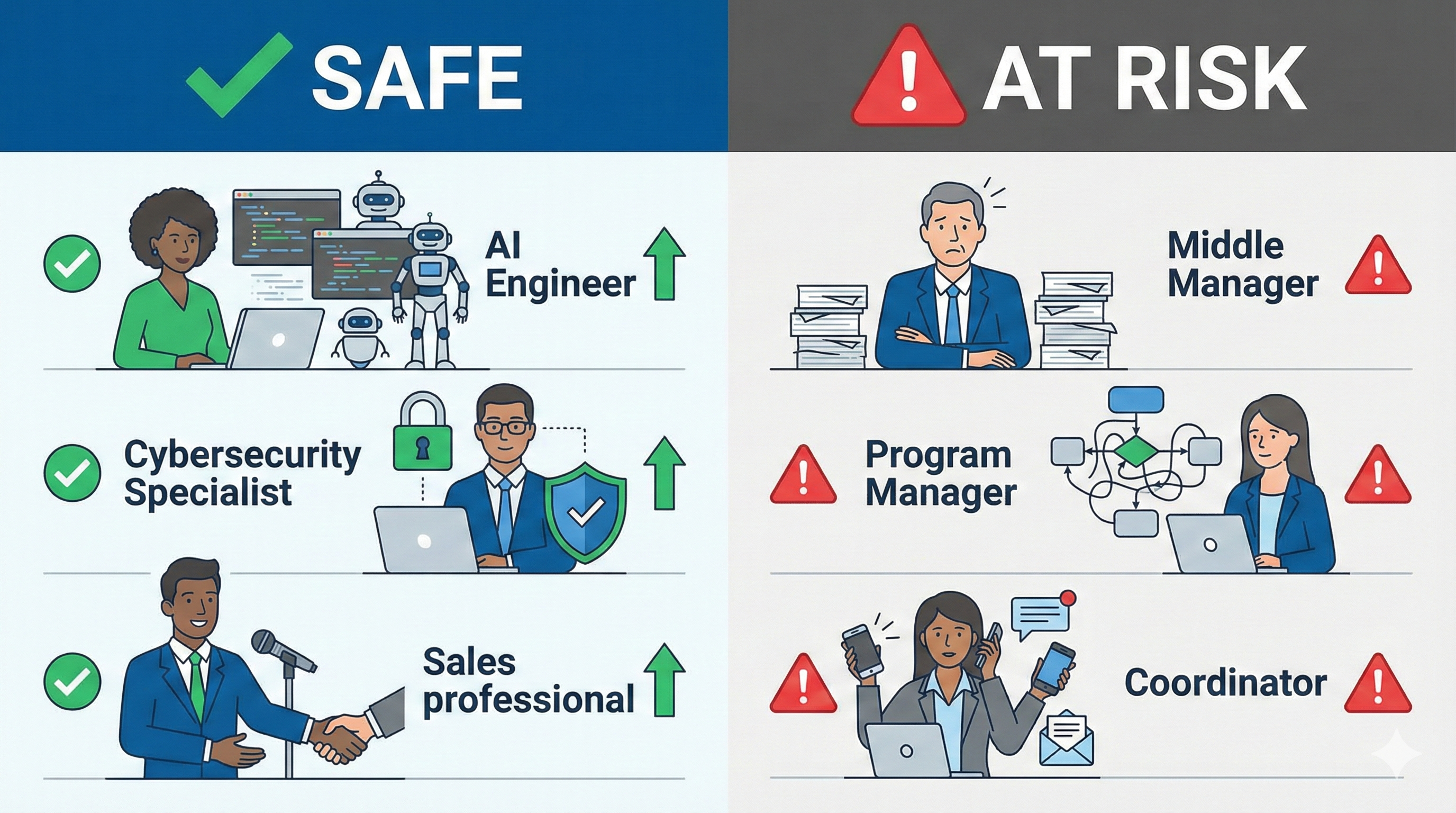
- AI/ML Engineers and Data Scientists: Roles related to AI saw 25% growth year-over-year. The median salary hit $157,000 in Q1 2025.
- Cybersecurity specialists: Network security roles are projected to be among the fastest-growing globally through 2030.
- People who make AI work: Not just builders—operators, trainers, prompt engineers, and integration specialists.
- Revenue-generating roles: Salespeople who close deals. Account managers with strong client relationships. Anyone with direct line-of-sight to cash.
Who's at highest risk? Middle management. Program managers in mature products. Anyone whose primary job is coordination, process governance, or "alignment."
One HR executive told me something that stuck: "If your job can be described as 'making sure people talk to each other,' you should be very worried."
The Skill That Actually Matters
I'm going to tell you something that will sound counterintuitive:
The most important skill in 2026 isn't learning to code. It isn't prompt engineering. It isn't even "learning AI."
It's demonstrating relevance to a specific job opening.
Here's why: 98% of Fortune 500 companies now use Applicant Tracking Systems to filter applications. The average job posting receives 242 applications—three times more than in 2017. Recruiters spend seconds scanning resumes that make it through.
This means the game has fundamentally changed. You're not competing with humans anymore. You're competing with algorithms first, then humans.
According to NACE's 2026 Job Outlook, nearly 70% of US employers now use skills-based hiring practices. They don't care where you went to school. They care whether your resume matches their job description.
This is where most job seekers fail catastrophically.
The System That Works
Career coaches consistently emphasize the same thing: your resume needs to speak the language of each specific job posting.
Consider this real example: One job seeker applied to 200 jobs with a generic resume. Three callbacks. She then spent two weeks customizing each application to match specific job descriptions. Twenty-three callbacks from fifty applications.
Same person. Same experience. Different approach.
Here's the system:
- Find the job posting. Copy the entire text.
- Identify the keywords. Look for skills, tools, methodologies, and outcomes mentioned multiple times.
- Mirror the language. If they say "data analysis," don't write "analytics." If they say "cross-functional collaboration," use that exact phrase.
- Quantify everything. "Managed projects" becomes "Led 12 cross-functional initiatives resulting in $2.3M cost savings."
- Remove the noise. Everything that doesn't directly support your candidacy for this specific role should go.
This is tedious. But it's also what works.
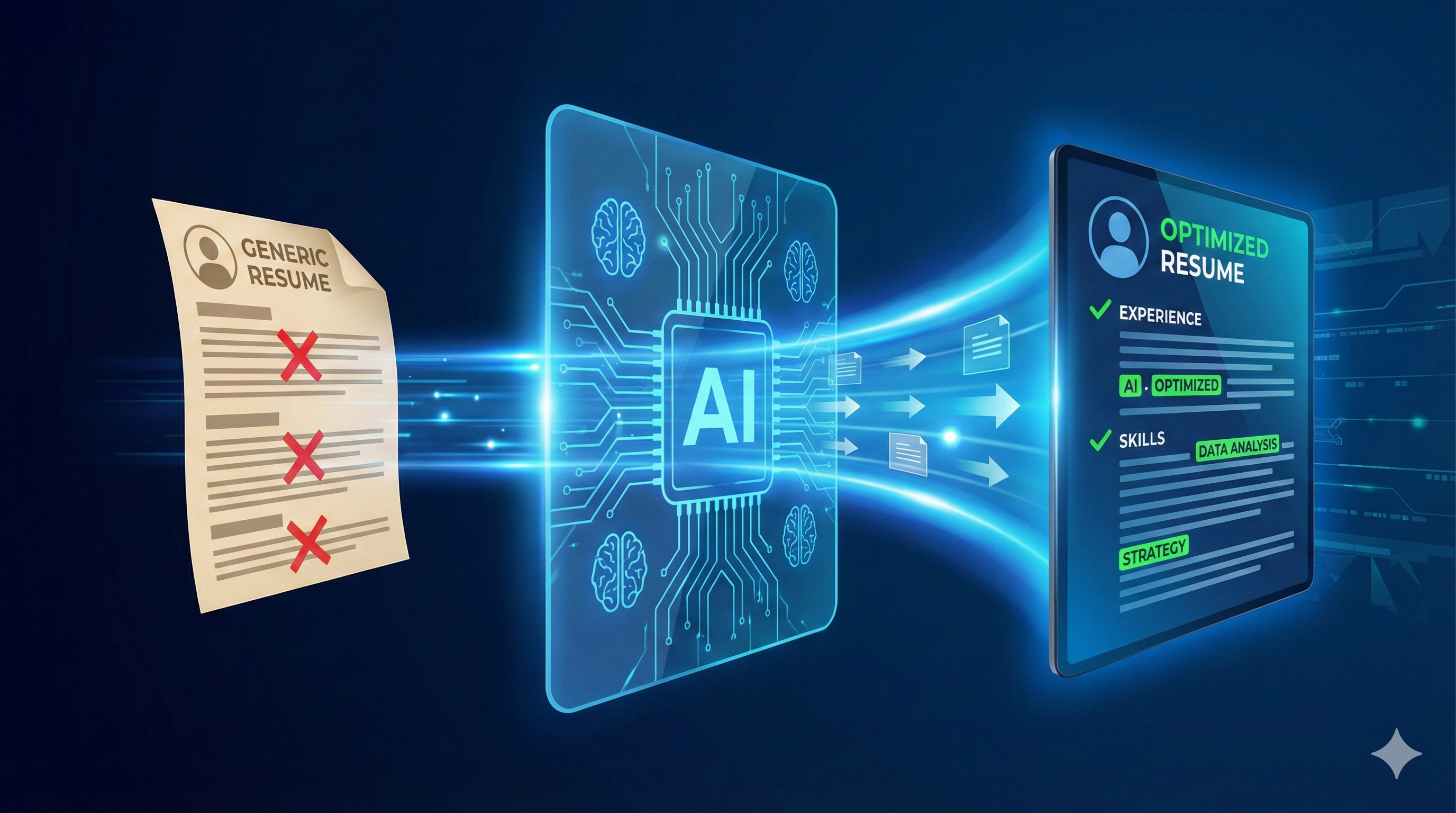
Fortunately, tools now exist to automate much of this process. CV by JD lets you paste a job description, upload your resume, and instantly identifies keyword gaps and suggests optimizations. It's the kind of AI that actually helps job seekers rather than replacing them—solving a real problem elegantly.
The Mindset Shift
Here's what emerges from interviews with people who successfully navigated layoffs:
They didn't wait.
They didn't wait to update their LinkedIn. They didn't wait to reconnect with old colleagues. They didn't wait to start learning new skills. They didn't wait for the severance conversation to start applying.
The market rewards prepared minds. And in a "low-hire, low-fire" environment—Fed Chairman Powell's phrase—preparation is everything.
Three things to do this week:
-
Refresh your resume with recent accomplishments. Even if you're employed and content. Especially if you're employed and content.
-
Audit your skills against current job postings. Go to LinkedIn right now and look at ten listings for your target role. What keywords appear repeatedly? Do you have them? Can you get them?
-
Reach out to five former colleagues. Not to ask for a job. Just to reconnect. The best opportunities come from people who already know your work.
The Long Game
The next few years won't be easy for workers. That's the reality.
But history offers perspective—the dot-com crash, 2008, COVID, and now this. The pattern is consistent:
Every disruption creates two groups: those who adapt and those who resist.
The adapters don't necessarily have more skills. They have better systems. They have stronger networks. They have resumes that actually communicate their value to the algorithms and humans making hiring decisions.
The AI revolution isn't coming. It's here. Companies are making billion-dollar bets on a future with fewer employees.
Your job is to make sure you're one of the employees they keep.
If you found this useful, share it with someone navigating a career transition. And if you're actively job hunting, CV by JD can help optimize your resume for each application—one of the few AI tools genuinely designed to help job seekers compete in this market.
Sources: TrueUp Layoffs Tracker, RationalFX Global Tech Layoffs Report 2025, Challenger Gray & Christmas, Reuters, CNBC, InformationWeek, NACE Job Outlook 2026